Sales, operations and finance each held their own view. A customer history was retrieved by searching several files. Nobody could answer, in one place, what was open with this customer.
One customer, one record, every department
A home-repair intermediary replaced processes that ran disconnected across sales, operations and finance, with side spreadsheets and documents filling what its previous platform could not, with one system where the customer is a single record carrying opportunities, service orders and pending payments, and where a business partner opens and follows its cases directly.
The recorded interview is undated and the transcript is machine-generated. The public video was published in February 2023. The company describes itself as expanding at the time; its current footprint is not known to us. The speaker is identified by role only. The three percentages are the company's own statements, without baselines.
A home-repair intermediary whose inventory is the customer record.
Otto intermediates home repairs and small renovations. Customers contract through e-commerce; a vetted professional partner executes the job. The same customer may be a sales opportunity, an open service order and a pending payment at the same time.

Home-repair intermediary
E-commerceHow customers contract, with WhatsApp and email for contact
PartnersProfessionals who execute the repairs, not employees
GuaranteeThe company selects, trains, schedules, quotes and guarantees the work
1 panelPartner panel connected directly to the system
~50%Reduction in platform cost compared with the previous platform, by its billing model aloneTechnology lead, in the recorded interview; self-reported.
~50%Reduction in resolution time for cases with the business partner after the panel went liveSame source; self-reported, no baseline stated.
~95%Share of that partner's cases meeting SLA on quotation and execution of repairsSame source; self-reported, period not stated.
1Partner panel connected directly to the system, communicating in the platformRecorded interview.
“We ran all our processes in a disconnected way. That meant I had no integrated view of my customer, which made it hard to retrieve their history and to see them across the financial, operational and commercial sides. The lack of integrated information created a process problem and a communication problem: sales would be negotiating with a customer while operations had another process running for the same customer.”
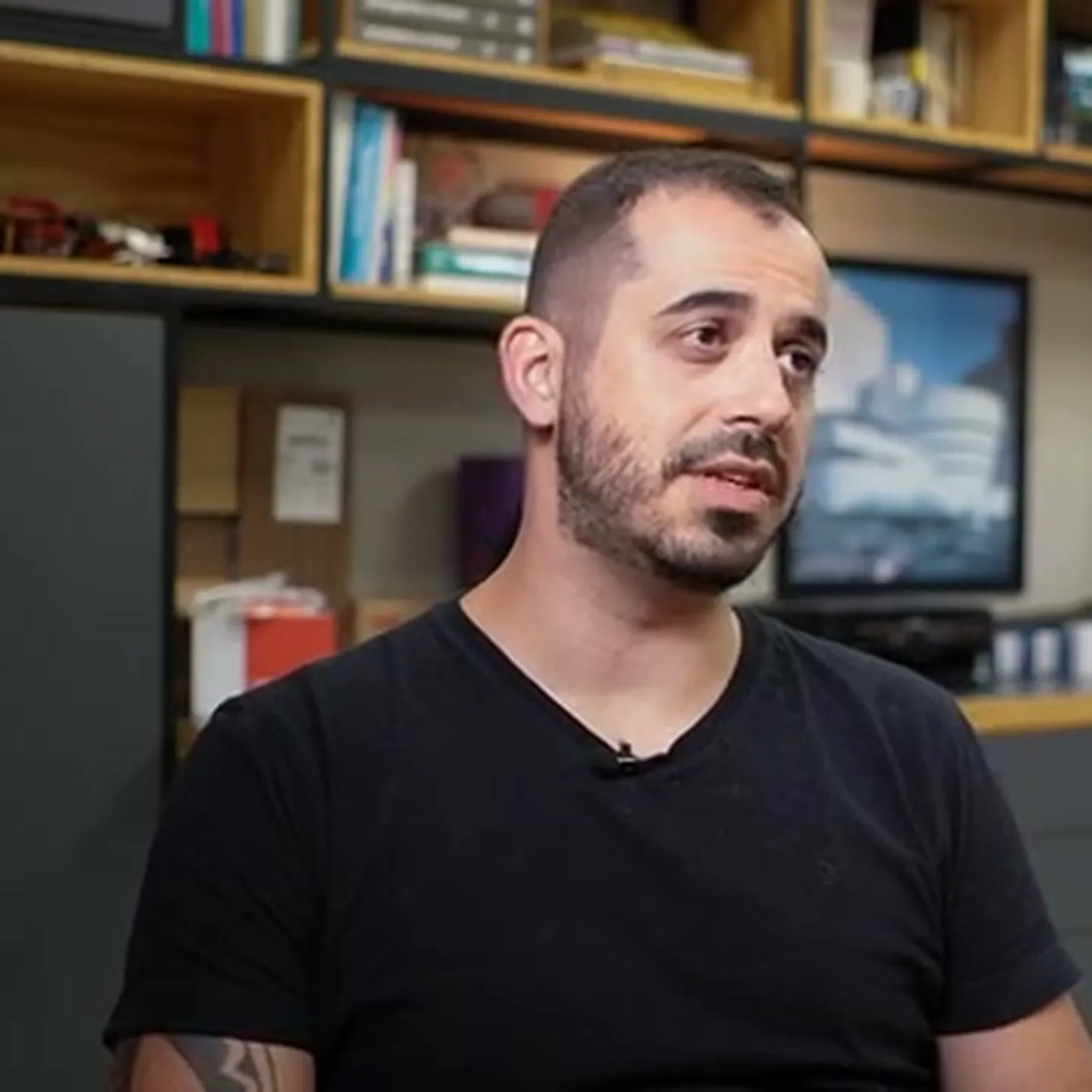
OttoTechnology lead, in the recorded interview
BeforeAfter
- Three departmental views of the customerOne customer record with opportunities, service orders and payments
- Searching several files for a customer's historyHistory on the record
- Sales and operations discovering each other's work lateBoth working on the same record, visible to each
- Side spreadsheets and documents per departmentThe information the platform used to leave out, held in the system
- Reports the team did not trustReports built from the operation's own records
- Partner cases followed by message and emailA partner panel connected to the system; cases opened, quoted, approved and followed in the platform
- A platform billed in a way that cost twice as much for the same useA platform whose billing model roughly halved the cost, by the company account
What was not replaced. The professionals stayed as partners. The customer channels stayed. The business partner operation stayed; only its interface changed. No department was reorganised; each kept its work and lost its private copy of the customer.
The bottleneck was operational, not commercial
Otto, known to its customers as "Chame o Otto", intermediates home repairs and small renovations. Customers contract through its e-commerce, describe the problem and send photos by message, and a vetted professional partner executes the job; the company selects and trains the professionals, handles scheduling, quotes, materials approval and payment, and guarantees the work. It operates in a large metropolitan area and was expanding at the time of the interview, and it has been part of a bank-run innovation hub.
An intermediary has no product of its own; it has a customer, a professional and a process between them. The same customer may be a sales opportunity, an open service order and a pending payment at the same time, and each of those belongs to a different team. Add a business partner that sends cases in volume and expects quotes and repairs inside agreed deadlines, and the process has to hold five parties in step for every job.
That is why the bottleneck was operational and not commercial. Jobs were coming in. What the company lacked, in its technology lead's words, was an integrated view of the customer: each department knew its part, none could see the whole, and the previous platform did not hold enough for anyone to try.
The platform held part of the process, the departments held the rest, and the customer fell between them
“We ran all our processes in a disconnected way. That meant I had no integrated view of my customer, which made it hard to retrieve their history and to see them across the financial, operational and commercial sides. The lack of integrated information created a process problem and a communication problem: sales would be negotiating with a customer while operations had another process running for the same customer.”
Sales would be in negotiation while an operational process for the same customer was already running. The two found out from each other, late, or not at all.
Each department kept spreadsheets and shared documents to hold what the platform could not. The technology lead's job title, in his own joke, became "spreadsheet exterminator".
Reports on counts, ratios and percentages from the previous platform were unreliable enough that the team did not use them to decide.
The pattern: the platform held part of the process, the departments held the rest, and the customer fell between them. Nothing was broken; the company was growing. But every new partner and every new area of the city added cases that had to be reconciled by hand across three views that did not agree.
Item by item, what did each job before and what does it today
| What did this before | What does it today |
|---|---|
| Three departmental views of the customer | One customer record with opportunities, service orders and payments |
| Searching several files for a customer's history | History on the record |
| Sales and operations discovering each other's work late | Both working on the same record, visible to each |
| Side spreadsheets and documents per department | The information the platform used to leave out, held in the system |
| Reports the team did not trust | Reports built from the operation's own records |
| Partner cases followed by message and email | A partner panel connected to the system; cases opened, quoted, approved and followed in the platform |
| A platform billed in a way that cost twice as much for the same use | A platform whose billing model roughly halved the cost, by the company account |
What was not replaced. The professionals stayed as partners. The customer channels stayed. The business partner operation stayed; only its interface changed. No department was reorganised; each kept its work and lost its private copy of the customer.
The chain, end to end, for a case from the business partner
- 1The partner opens a case in its panel, which is connected to the systemExternal
The habit of sending cases stays; the channel is now the panel.
- 2The case becomes a service order linked to the customer and property recordAutomatic
One record, not a message thread.
- 3Operations assigns a professional partner and schedules the visitPerson
The system cannot choose who goes.
- 4The professional diagnoses and the quote is registered on the orderPerson
A person sees the leak; the record holds the quote.
- 5The quote reaches the partner through the panel; the partner approves in the platformExternal
Approval is still a person; it no longer waits on an email.
- 6The professional executes; completion is registeredPerson
The system cannot confirm a job is done.
- 7Payment to the professional and billing to the partner are prepared from the same orderAutomatic
Finance no longer rebuilds the order from a spreadsheet.
- 8Time per stage is measured against SLA; dashboards updateAutomatic
The figures come from the same records the operation runs on.
The hard links are 3, 4 and 6. The system cannot assign a professional, diagnose a leak or confirm a job is done; people do. What the design removed is the reconciliation between them: the partner no longer asks by email where its case is, sales no longer discovers operations work by accident, and finance no longer rebuilds the order from a spreadsheet. The 50% and 95% figures the company reports for partner cases are the effect of taking the messages out of the chain, not of taking the people out.
“Right away, the platform gave me a saving of about 50% on the previous one, just from the way it charges, not counting the indirect cost we had of finding information across several files. And once the commercial process was structured, we built a panel for a partner that connects directly to the system. That cut the resolution time on their cases by about 50%, and we reached about 95% on the SLAs for quoting and executing their repairs.”
What changed, and what the source does not measure
| Indicator | Result | Where it comes from |
|---|---|---|
| Customer visibility | From three departmental views and several files to one record with history | Recorded interview |
| Cross-department communication | From sales and operations colliding on the same customer to both on one record; failures and time reduced, by the team account | Recorded interview; no measure of communication time is given |
| Reporting | From untrusted figures to reports built on the operation's records | Recorded interview |
| Platform cost | About 50% lower than the previous platform by billing model | Recorded interview; self-reported |
| Partner cases | Resolution time cut by about 50%; about 95% of cases within SLA on quotation and execution | Recorded interview; self-reported, no baseline or period |
All three percentages are the company's own, stated in conversation. The cost saving is explained as a consequence of the platform's billing model and is not given in currency. The resolution-time reduction and the SLA figure concern one business partner's cases, with no before-figure, period or case count. This write-up reports them as the technology lead reported them.
The partner panel is the one result with a mechanism. Cases used to be followed by message; they are now opened and approved in the platform. Shorter resolution follows from that directly. The 95% SLA figure is the company's measurement inside the system and is plausible for the reason given; it is not independently verified.
"Integrated view" means one record, not one department. Sales, operations and finance still exist and still own their steps. What changed is that they read and write the same customer record.
No company-scale figure exists. Cases per month, number of professionals, revenue and team size are not in the source and are not estimated here.
What this case does not measure
Worth naming, because it is usually what gets inflated.
All descriptions and both quotes come from the technology lead in a recorded interview whose transcript does not give a name. No process was independently observed.
"About 50%" and "about 95%" are stated without the number they moved from, the period measured or the number of cases. They are the team figures.
And is not characterised here beyond what the company said about its cost and its gaps.
Several passages were reconstructed from context. The company describes itself as expanding at the time; its current footprint is not known to us. The public video was published in February 2023.
He describes evolving panels during business meetings. Jestor now builds and maintains the system on the customer behalf; those passages are not used as evidence.
The resolution and SLA figures refer to a single partner's cases. Nothing in the source says the same holds for consumer jobs.
Repair is a large, slow market where the intermediary's margin is the process
| Indicator | Number | Source |
|---|---|---|
| Annual homeowner spending on improvements and repairs, largest published market | About USD 518 billion projected for end of 2026 | Joint Center for Housing Studies of Harvard University, Leading Indicator of Remodeling Activity, revised April 2026 |
| Growth in that spending | 2.1% year over year mid-2026, easing to 1.6% by year end | Same release |
| Spending at end of 2025 | About USD 514 billion, up 2.7% on a year earlier | Same programme, January 2026 release |
Half a trillion dollars a year in the most-measured market, growing at one to three percent: there is no growth to hide inefficiency in. An intermediary that takes a fee between a homeowner and a tradesperson earns it by making the job happen with fewer messages and fewer misses than the two parties would manage alone. Its cost base is coordination.
A retailer counts stock; an intermediary counts open cases per customer, and it cannot count what is split across three departments files. This company own diagnosis, that it could not see its customer whole, is the intermediary equivalent of a warehouse with no count.
The spending figure above measures what homeowners pay for materials and labour. The intermediary's share, its case volume and its resolution time are not in any public series. A company own SLA per stage, as measured in this case, is the number to plan on.
The system is built to fit, and responsibility for it stays with us
Otto had a platform. It held part of the process and left the rest to spreadsheets, and it charged in a way that cost twice what the company now pays. The question a bespoke system has to answer is what happens in year two: a customer record nobody can extend when a new partner arrives, or a panel nobody can adapt when the partner changes its process, becomes the next set of side spreadsheets in three years, with a login.
One builder owns each request from start to finish, and one is always in execution.
A new partner panel, a new report or a new automation comes in through the same channel, without becoming a new project.
If what was built is not right, it is rebuilt. Unlimited revisions within the subscription.
Seats are never the billing unit, which matters when sales, operations, finance, professionals and a partner's own team all touch the same records.
People learn to use their app the way they learn any app, by opening it. Building, configuring and maintaining stays on our side.
Full export at any time, by CSV and API. SOC 2 compliant, no exit fee. Pause in one click and the systems keep running.
Methodology and sources
The before-and-after descriptions and both quotes come from a recorded interview with the company technology lead, used through its machine-generated transcript, which does not give a name. Quotes were cleaned of transcription noise without changing their content. The account is the company own and was not audited. Passages describing the technology lead building dashboards himself were not used as evidence.
Business model, professional-partner model, channels and guarantee from the company's own site. Hub membership from the company's own public posts.
Joint Center for Housing Studies of Harvard University, Leading Indicator of Remodeling Activity, January 2026 and April 2026 releases.
The three percentages are reported as the company's own statements without baselines, because none was given. No case volume, revenue, professional count or team size is claimed.